

Ever get out of bed, reach to grab your coffee mug, and realize your lower back or neck feels completely locked up?
You’re definitely not alone. Between sitting at a desk eight hours a day, hitting the gym, or just carrying daily stress, our bodies take a beating. But here is something most people miss: that nagging tightness isn’t always sitting in your muscles. A lot of times, it’s coming from your fascia.
If you’ve been looking around for myofascial release therapy in Ontario, you probably just want plain answers. What actually happens during a session? Will it hurt? And is it actually worth your time and money?
Here is what you should know before booking.
Understanding the Cling-Wrap Under Your Skin
Think of fascia as a flexible layer of cling-wrap sitting right under your skin. It wraps around your muscles, joints, bones, and nerves to hold everything together.
When your body is healthy, fascia stretches smoothly every time you bend or twist.
When you get hurt, sit slouched over a laptop for months, or deal with chronic stress, that tissue loses its stretch. It gets thick, sticky, and forms tight spots called restrictions.
Because this network runs through your whole body, a tight patch down in your hip can easily pull on your lower back. That’s why rubbing just the spot that aches doesn’t always fix the actual problem.
What Actually Happens on the Table
If you’ve ever had a standard Swedish massage, you know how it goes—a lot of oil, long sliding strokes, and kneading.
Myofascial release feels totally different.
Instead of moving quickly over your skin, the therapist finds the tight spots and presses into them with light to medium pressure. Then, they just hold it there. No sudden digging. No fast rubbing.
They might hold that exact spot for three to five minutes.
It sounds long, but dense connective tissue needs time to yield. The steady warmth and pressure give those sticky fascial fibers a chance to slowly melt, stretch out, and let go.
How It Differs From Regular Massage
A lot of people ask if this is just a fancy name for deep tissue massage. It really isn’t.
Deep tissue massage uses heavy, sliding pressure across muscle fibers to break up knots. Myofascial release relies on slow, static pressure held over time to stretch out the surrounding tissue web.
Where traditional massage focuses on short-term surface relaxation, fascial work aims at fixing your baseline structural alignment so you can move without that constant pulling feeling.
Common Questions People Ask
Is myofascial release therapy painful?
No, and it shouldn’t be! You might feel a deep stretch or slight tenderness over tight areas, but sharp pain is a red flag. If you wince or guard your body, your muscles automatically tighten up, which ruins the treatment.
Can it help with lower back stiffness?
Regularly, yes. Lower back pain often comes from tight fascia in nearby areas like your glutes, hamstrings, or mid-back. Releasing those spots takes direct pressure off your spine.
How many sessions will I need?
It depends on how long you’ve felt tight. Some people notice a big shift after one or two visits. If you’ve been sitting with bad posture for years, it usually takes a few sessions paired with home stretches to make the changes stick.
Finding the Right Care in Ontario
In Ontario, Registered Massage Therapists (RMTs) go through extensive training to get licensed. But every RMT has their own style and treatment focus.
When you book, ask if the therapist has specific training or experience with hands-on fascial work.
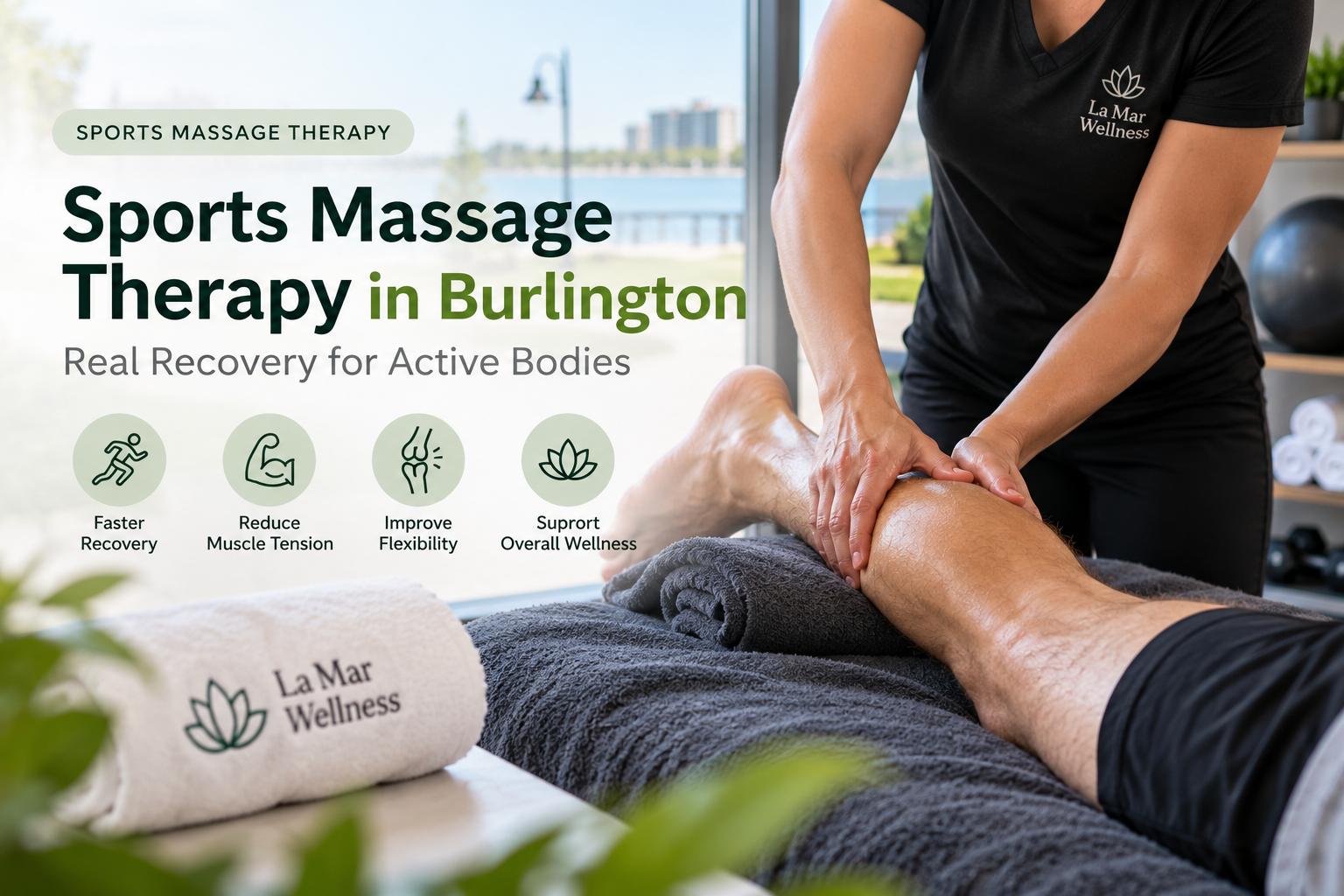
At La Mar Wellness in Burlington, our RMTs focus on practical, individual care. We take the time to figure out why your body is pulling in the first place—and build a treatment plan that actually helps you move better day to day.
If you’re tired of living with constant tightness, reach out to La Mar Wellness today to learn more about our massage options or book an appointment.